Showing posts with label language. Show all posts

Sunday, April 17, 2016


The article here.

It'd be quite a feat to select and position 40 icons for this purpose. And a lot of fun

Sunday, December 20, 2015

Wordle

Just testing this html code for a Wordle, linked from Jamie Keddie's site here.

  Wordle: Size

Thursday, February 28, 2013

Who said anything about B I G ?


Here is something you might find interesting: an online test that can guestimate your vocabulary size. It does rely on your honesty, and since you are not competing with anyone, just select the words that you do know.

You might also like to have a look at the charts of data that have been collected from many thousands of participants: click "blog" in the footer of the site.

You might like to tell us how you compare with the data.


Thursday, July 05, 2012

A total disconnect

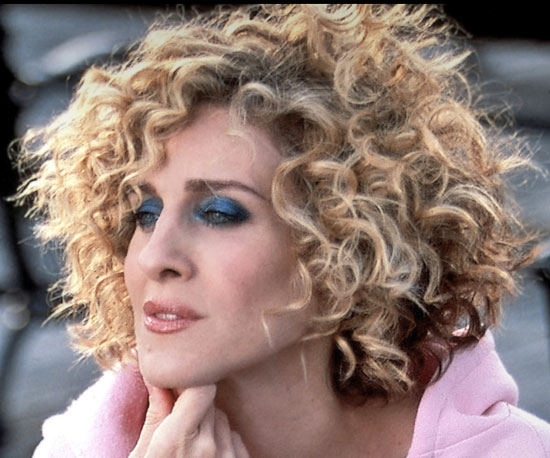
Carrie Bradshaw had never heard the word disconnect as a noun. She and Samantha have just entered an exclusive party, thanks to the intervention of someone representing Matt Damon. Carrie must have explained that her press card didn't work in LA as it does in NY, and the guy says Wow, that'a total disconnect. God, what a reaction for Carrie to have to deal with! When she repeats querulously, he's mollifies the situation pulling out the all-purpose synonym, it's a fuck-up. At last they were speaking the same language. East meets west separated by a common language.

I guess that series is like ten years ago, dude, but crikey, how could that be not in her vocabulary?

PS: how come they didn't play Go West?

Sunday, June 10, 2012

Is it right to write swoony soft-porn prose?

James Naughtie


For years I've been listening to book progams, in which interested readers chat with authors under the careful stewardship of an omniscient host, the chap pictured on the right being my fave to date. An aspiring author (henceforth AA) learns interesting tidbits from these programs, and in listening to a string of them in close proximity, as one can in the age of podcasts for iPods, certain commonalities (metatropes?) emerge. They are less likely to do so when such programs are broadcast once a month, the BBC's Book Club being a case in point, owing to the greater demands placed on our memory. Who needs a memory when you've got Voice Memos on your iPod? Whenever I think I've made an observation worthy of posterity, I dig my iPod out, interrupt the slow mvt of Mozart's A Major piano concerto, to record my afflatus so that it can  be retrieved and embedded in such worthy blog entries as this one or my journal, or if they pertain to a particular activity such as courses I create and teach, grants I might apply for, course books I have drafted and got nowhere with, or most eponymously my current novel that'll never see me on a book program ...

The authors often brag about being scavengers of people's lives, whether those close to them or a snippet overheard on a train. Some talk about the extensive research they did, while some say they did none. Some tell us that they wrote the book from beginning to end with barely an edit before submitting it to their publisher, while others tell us that they have rewritten the book countless times. I even heard one say the other day that he used to listen to the BBC program and imagine how he would field these questions if he ever he got to be on it. The largesse of their tone deserves comment: I always like this question, or I always try to dodge this question (+ belly laugh), generous ways of saying that they've fielded this question innumerable times.

What prompted me to pen this post was a chat with Madeleine Miller, the author of The Song of Achilles which has just won the Orange Prize for fiction (see below). 

It "is cast as Patroclus’ autobiography and concentrates on the love affair" (NYT) with Achilles. The jolly discussion on this morning's The World Today may contribute to one's prowess in a trivia quiz but is unlikely to hone the AA's  ability to see their writing through the critical eyes of the Other.

To correct this leaning, here are a few excisions from Daniel Mendelsohns' review of said book in the NY Times. Before reading on, do note that the book cover pictured here reveals it is a NYT best seller.

Now, what can we AAs learn from the following:
  • The result is a book that has the head of a young adult novel, the body of the “Iliad” and the hindquarters of Barbara Cartland.
  • Miller’s Patroclus observes, in one of the numerous asides that sound irritatingly as if they were lifted from SparkNotes
  • ... adolescent Sturm und Drang ...
  • “I am sorry for your loss,” ... You wonder just which funeral home this took place in. (Achilles says this to Priam whose son he has slain).
  • .. the “love affair,” which begins with an embarrassing breathlessness
  • Why is this so awful? Partly it’s the swoony soft-porn prose: the heavy breathing and soft-focus skin shots ... make it hard, in the end, to take these characters seriously.
OMFG, does this AA's novel do these things? Sure it does but at least the reader (= the AA) gets the pisstaking way it does so. I wonder if another reader would get it, or if s/he would dump à la Mr. Mendelsohn.

Now, remember this book won the Orange Prize, which as Wikipedia tells us, is annually awarded to a female author of any nationality for the best original full-length novel written in English, and published in the United Kingdom in the preceding year. In awarding the prize, Ms. Trollope said, "This is a more than worthy winner — original, passionate, inventive and uplifting. Homer would be proud of her." (from here). Again, Mr Mendelsohn would surely beg to differ.

And so to conclude with a bit of swoony soft porn, let's wrap up with a photo of Garrett Hedlund who plays Patroclus in the excruciating Troy film(s?). If you need more even more of him, you can find plenty on this Fan page.


Final word - big fat cheers to those authors who can write from beginning to end without editting. Even this wee post has taken over two hours and quite a few revisions to get it to this beta version, and which has only put off the inevitable day of marking ahead of me.

Sunday, March 04, 2012

Counting words

I remember my first encounter with lexical statistics as if it were only yesterday. Now, you can't get much more romantic than that. Reading the introduction to a dictionary, as we do, in Europe's biggest department store, Das KaDeWe  in Berlin  in 1990, some years before its second innings as the capital of Germany.  it must have been a German-English dictionary and probably by Langenscheidt, perhaps the one pictured here.

The introduction, as I remember it,  spoke about high-frequency words and word combination. Having  made an attempt on the Italian and German in courses that were entirely grammar translation, the thought of eating practical and representing the language as it really is was a bolt.  Or a jolt.  it  atpiqued my curiosity greatly but I had no idea how I would ever follow this up.

Around the same time I was on a train from Berlin to Dresden. A fellow passenger who had just been to a computer trade fair told us of a new type of computer that was soon to come on the market. It would be about the size of an A4 note pad and eminently portable.

There really was a time before laptop computers and lexical statistics for the whole family. However did we survive?

 It must have been in 1991 after doing the Czech as a foreign-language summer school, that I met Karel Pala who very interested in lexical data.

That's how it all started!

Tuesday, February 07, 2012

Very cool linguistic research

A Corpus-based Approach to Finding Happiness


 It's so interesting to come across this old paper (2006) within 12 hours of posting the TED talk on a closely related subject. Long live serendipity. 

 What are the sources of happiness and sadness in everyday life? In this paper, we employ ‘linguistic ethnography’ to seek out where happiness lies in our everyday lives by considering a corpus of blogposts from the LiveJournal community annotated with happy and sad moods. By analyzing this corpus, we derive lists of happy and sad words and phrases annotated by their ‘happiness factor.’ Various semantic analyses performed with this wordlist reveal the happiness trajectory of a 24-day (3am and 9-10pm are most happy), and a 7-day week (Wednesdays are saddest), and compare the socialness and human-centeredness of happy descriptions versus sad descriptions. We evaluate our corpus-based approach in a classification task and contrast our wordlist with emotionally-annotated wordlists produced by experimental focus groups. Having located happiness temporally and semantically within this corpus of everyday life, the paper concludes by offering a corpus-inspired livable recipe for happiness. The authors are Rada Mihalcea and Hugo Liu For the full research article, click pdf.

Friday, February 03, 2012

The most famous gap fill in history

The German Censors  ——  ——  ——  ——  ——
——  ——  ——  ——  ——  ——  ——  ——  ——  ——
——  ——  ——  ——  ——  ——  ——  ——  ——  ——
——  ——  ——  ——  ——  ——  ——  ——  ——  ——
——  ——  ——  ——  ——  ——  ——  ——  ——  ——
——  ——  ——  ——  ——  ——  ——  ——  ——  ——
——  ——  ——  ——  ——    idiots    ——  ——
——  ——  ——  ——  ——  ——  ——  ——  ——  ——
——  ——  ——  ——  ——  ——  ——  ——  ——  ——
——  ——  ——  ——  ——  ——  ——  ——  ——  ——
——  ——  ——  ——  ——

by the great German poet Heinrich Heine. Dozens of composers, including Schubert, have set his poetry to music, though I'm not aware of anyone making an attempt on this particular one. See this bit of Wikipedia for the not uninteresting context in which this was penned.

Sunday, January 29, 2012

There would be a lot less violence in the world if ...

... if all animals were herbivores.

Zebras are herbivores.

Less than two weeks after posting this, the BBC Nature section reports research into why zebras evolved their stripes. The article is here.

From a linguistic point of view and one that represents the real world, it seemed odd to me that [animate creature] evolves [feature]. There are many transitive uses of this verb. The most frequent objects of the verb, according to the BNC, are shown in this screen shot from the Sketch Engine. These items clearly belong to a lexical set we might entitle approaches, thus
[person/organisation] evolves [approach].

Most other transitive uses of evolve have representatives of the animal kingdom as their subject, the implication being that the speakers/writers accept that the
creatures manipulate their environment over a long period to acquire the feature they now have. Another example:
Several groups of them specialise in this diet and each has evolved a long sticky tongue entirely independently...
However, the verb is far more frequently used intransitively and in perfect forms, e.g.,
The character of the British countryside has evolved due to changing agricultural, industrial and recreational pressures ...
 I would say that this is a good example of the verb being used ergatively. See Wikipedia on this topic.

Saturday, November 26, 2011

Heavy and Light Verbs

I find that when I make a frequency-based collocation list, the items at the top are light  verbs and when I make an M.I. collocation list, the verbs at the top are heavy – that is, they are semantically rich. This is just a tendency of course. Look at these two lists of verbs which have advantage as their object.


If a collocate appears in the top of both MI and T-score lists it is clearly a humdinger of a collocate, rock-solid, typical, frequent, strongly associated with its node word, recurrent, reliable, etc etc etc. 
This is certainly the case in these examples of the noun advantage.
This is a quote from Jeremy Clear that you will find here.


Sunday, August 17, 2008

The Wisdom of Confucious

Spent yesterday at QuFu in Shandong Province with some colleagues and students, visiting the palace and temple of Confucius, not that he had a palace or temple during his lifetime - they are posthumous recognition of his contribution to society.

During the day, and in relation to depictions of the great man, one of my colleagues mentioned that he too is a paraclete. When I confessed ignorance of the word, he said that it meant having gapped teeth, which indeed he does, right between his two front teeth. It seemed like an odd word and he confessed (his turn) to never having checked it out and I was not entirely convinced of the spelling he offered either. I asked if it didn't mean he had two clitorises or clitorides(if that be the plural). He doubted it. Wisely.

Back at the ranch, Wikipedia spilt the beans on paraclete thus. Gapped teeth was a different story altogether:simplestepsdental.com discusses diastema tho oddly says, A diastema does not cause symptoms.. Who's not relieved to hear that? Look at real 's some modern day diastema here, neither my colleague's nor Confucius'.

Whilst in wordy mode, it finally occurred to My Fabulous Opinion to search for the long lost word that is the female equivalent to phallic, flowers being obvious possessors/purveyors of this attribute. The timing of this was due to a lovely walk after a lovely meal in a lovely Buddhist restaurant. We ended up in the central square in Jinan where, at one end there is an unattractive three-pronged soft-blue pole with a silver ball amid it (go figure - as my American friends say) and at the other end of said square, a huge bronze statue of a lotus flower.

The word in question is yonic and the best account of the word MFO found comes from here. If you are a G & S fan, do read the whole entry. And if you do not know what G & S is, do not count yourself as a fan.

It would be remiss of me not to include merkin in this benighted discussion and who better to consult than urbandictionary.com. Scratch your merkin here.